"To feel vulnerable is to feel alive": How art defines Memunatu's clash between cultures
"I remember Ncuti, because I love the guy. He is a really good actor, and personality wise, he's just fun."
Fashion designer Memunatu Barrie tells Fatou about her passion for design in women's dresses with Hollandaise fabrics as well as experiences that have shaped her into the remarkable woman she is today. Throughout her life so far, Barrie has used her knowledge and expertise to shape her career as a fashion designer.
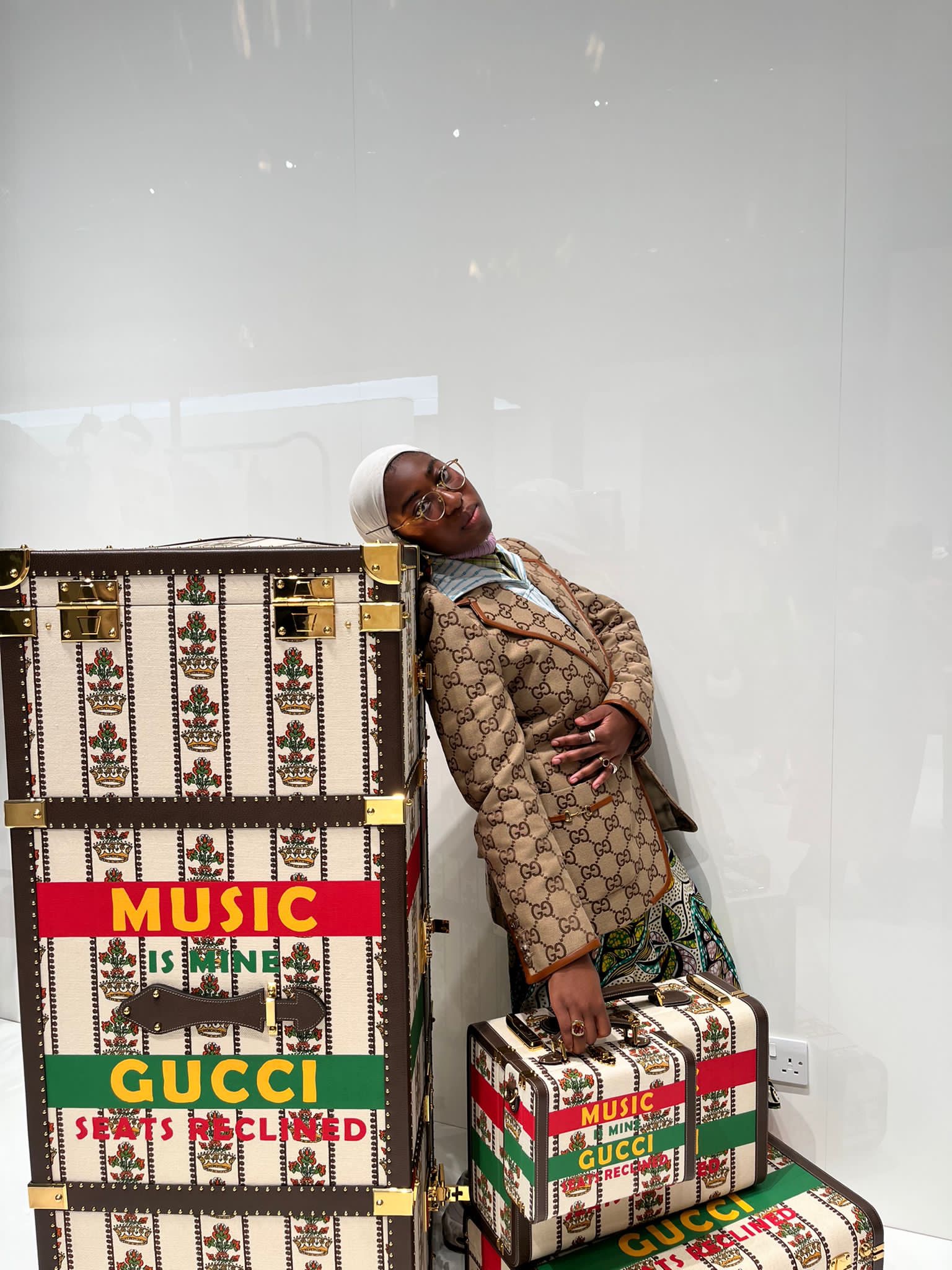
Born in 1998 to Sierra Leone Parents, Barrie grew up in a small town named Zwolle in the Netherlands. She describes her early life including how her passion for art and textiles emanated. Bridal wear designer Hermione de Paula and women's' wear PREEN by Thornton Bregazzi are two examples of brands she has interned with, including a commission for Tate.
Earlier this Spring, Memunatu was honoured to attend the Ozwald Boateng show during the London Fashion Week.
Q1: You were born in the Netherlands and then you moved to the UK. What was that experience like?
“Where I lived was very small, and not diverse. I remember being the only black family in our local area. In school, it was me and my sisters, and one other black girl and her siblings. We struggled with racism on a daily basis. However, despite this, the lifestyle was healthy. You'd go swimming after school. There were city farms and lots of activities for children. It was clean and genuinely safe in general. Then I moved to London in 2007 with my family, and I've lived here ever since.”
Q2: Did your experience of racism change your perspective on life?
“I think moving from the Netherlands to London was socially different. That's changed my perspective. A lot. Just my self image growing up as a black girl in the Netherlands made me forget I was black. But it wasn't a day-to-day issue for someone to say “oh my God, look at you”. Because it’s a mix of people. So, I think in terms of my outlook, I saw myself as someone to be ashamed of. Expressing that would have been embarrassing in my culture. In London, I learned to embrace my identity. Everybody just gets along. Well, we're tolerant of each other and London is way more tolerant than Zwolle. But it's not perfect. Although, there's so many different people you interact with, and you get exposed to different experiences, foods, and outlooks. So, I feel like moving from the Netherlands has changed my perspective so much that all those things influence who I am now.”
Q3: In terms of your passion for design and textiles, was it a gradual experience or a sudden feeling?
“It was definitely gradual from the time I was a child. I've always been into arts and crafts, drawing and painting. At one point I was the middle child, and I felt a bit overlooked. But my sisters would ask me to help them with projects. Even my friends would say, "can you draw this picture for me on my birthday?” My mum would buy dolls and obviously, she'd buy it with the full outfit, and then I'd tear up bits of fabric and make outfits for them. She hated that! So, I've always been creative. And when I did my GCSEs, it was an option at school to study textile design. I did it in my GCSEs and in my A levels because I enjoyed it that much. Eventually, I wanted my career to be what I felt like I was good at, my passion. I then studied it at university and now I'm a freelance textile designer whilst doing my masters.”
Q4: Your creativity seems endless...you use a range of collages of different colours. What does this suggest?
“I really enjoy colour and print which is bold and West African. Growing up, that's what I was exposed to: colour prints, anchor-West kind of cotton, dyed fabrics. The Netherlands produced a lot of the wax called Hollandaise or Vlisco, which had a very natural influence on me overall. So even now, although I don't necessarily use similar motifs or even the same process to create my own textiles, that kind of boldness is something I carry into my own work, which is what I'm attracted to. That's why I like bold, colourful clash. Just bold.”
Q5: Earlier this year, you were luckily enough to be invited to the Ozwald Boateng show. How did that make you feel?
“It was amazing! He has a running atelier which is constant, and he does a lot of bespoke pieces for celebrities. Idris Elba was one of the people who came out on stage, which was very exciting, cinematic and theatrical. But it was a really great event, which was all about black excellence too. There were some other guests like Ncuti Gatwa, the new Doctor Who, and other influential people. I remember him because I love the guy! I love him, he's a good actor with a fun personality. But yeah, one of the highlights of my year so far.”
Q6: So, have you participated in any internships?
“Yes. For my third year of Uni, we had an option to do a placement year or to go into final year, but I did a placement. I interned with London based luxury brands. One was Hermione de Paula, which was design based specialising in bridal wear…which was funny because I like prints and colour, and the majority of the clothing was Ivory. They did have some coloured pieces too. The other brand was PREEN by Thornton Bregazzi, which was about product development. Obviously, the wedding is specifically bridal wear. And then for PREEN, it was just mainly women's wear. But it was a good experience, as I got to see beyond the design phase, considering I'm planning on starting my own company.
Q7: Do you have any advice you would give to your younger self, or those wishing to go through the same career path as you?
“Luckily, my younger self was as stubborn as I still am, because she pursued what she felt was right. I was passionate about it. I still am. And I couldn’t imagine myself doing anything else. That doesn’t mean I'm not good at anything else, or I won’t do things temporarily to aid me to get to my final goal. But I would, I guess, advise her to be a little more secure in what she can do and, in her talents, not to change. In terms of other people, I could advise them, especially those from an ethnic minority, to do the same.”
Post a comment